Sunday, July 11, 2010

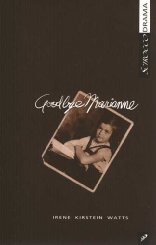
Goodbye Marianne


Goodbye Marianne by Irene Kirstein Watts is considered documentary fiction as it is based on the author's experiences in Germany during the Holocaust combined with experiences of others. Uniquely, this small volume is a play with three to seven actors. Marianne is a young Jewish girl living in Berlin in 1938. She experiences the tightening of laws against Jews. She finds she cannot attend school, cannot sit in the park, and sadly Marianne cannot trust her own emotions. She meets a boy who seems to be her friend until he finds out she is Jewish. She is unhappy to see that he is just like all the rest. In the end, he really is different, but it is not enough. Marianne's mother sends her on one of the first Kindertransportes to Canada. The sadness of this event is all too real for both mother and daughter. Still it saved Marianne's life.

The play is brief at only approximately 30 pages in a small book. I can easily see it being used in middle and high school history classes. The author also provides a well-defined glossary.

TITLE: Goodbye Marianne
AUTHOR: Irene Kirstein Watts
COPYRIGHT: 1995
PAGES: 48
TYPE: Documentary fiction
RECOMMEND: As I mentioned earlier, this could be used as a preformance during a Holocaust unit and open many different discussions.

Tuesday, July 6, 2010

Book Blogger Appreciation Week

Please make sure that you watch for Book Blogger Appreciation Week which will be September 13-17, 2010 this year. Tomorrow is the last day to register (which will list your blog in a directory and increase your visibility). In addition, you may submit your blog for awards. Although this blog is very specific in focus, I believe that the resources I review are vitally important for children's literature. Therefore, I am submitting the following five reviews for the Best KidLit Book Blog.

The Hidden Girl: A True Story of the Holocaust

The Cat with the Yellow Star

Brundibar

Passage to Freedom: The Sugihara Story

Elly: My True Story of the Holocaust

Thank you so much for your consideration and for remembering those whose stories will never be told.

Monday, July 5, 2010

The Number on My Grandfather's Arm


This is a very simple book with a great deal of information. The Number on My Grandfather's Arm is a conversation between a young girl and her grandfather. For the first time, the young girl notices a number on her grandfather's arm. She asks him what the number means. The girl's mother urges the grandfather to explain the number to the girl. The grandfather explains his experiences during the Holocaust in Poland. Both begin to cry and the young girl tells her grandfather,

I put my hand on Grandpa's and told him, "You shouldn't be ashamed to let people see your number. You didn't do anything wrong. It's the Nazi's who should be ashamed." (p. 22)

The beauty of this book is that each page has a photograph of a grandfather and granddaughter talking together. The author chose to use real people rather than illustrations and it adds to the realistic feel of the book. The author also includes some background history on the war - very simple so that it can be understood by a younger child.

TITLE: The Number on My Grandfather's Arm
AUTHOR: David Adler
COPYRIGHT: 1987
PAGES: 28
TYPE: Holocaust fiction
RECOMMEND: I really like this book for the younger child. The author touches on the many topics of anti-Semitism during the war. The number on the grandfather's arm stands for all the horrible things that happened to the Jewish people.


Friday, June 25, 2010

The Hidden Girl: A True Story of the Holocaust


The Hidden Girl: A True Story of the Holocaust is an amazing story of the resilience and strength of one child and her survival during and after the Holocaust. Lola Rein lives with her Jewish parents and grandparents in the Polish town of Czortkow. She is five years old when she has her first real memories of her childhood. In September 1939 Russian soldiers take over the small town and for a brief moment the Jewish population hopes their lives will be better, but the Poles are angered by their own treatment and lash out at the Jews. Over the next few years, conditions worsen and in 1941 the German army takes over the town. At this point, the Ukrainians lash out at the Jewish population. In April 1942, Lola and her family are moved to a ghetto. In 1943, Lola is eight years old when her mother is shot in cold blood by the Gestapo. A few months later, Lola's grandmother makes the decision to send Lola into hiding. She arranges to pay a Ukrainian woman to take Lola into her home.

So began Lola's lonely journey of suvival. She only lives with the Ukrainian woman for a few months and then is moved to the woman's sister's house where she hids in a six foot by six foot hole in the barn with three other Jews. She is wearing the dress embroidered by her mother and does not take it off for the nine months she is hidden in the hole. When she and the other Jews are liberated, Lola has no where to go. She returns to her home town and finds that her grandmother has been murdered. She begins walking with other displaced persons toward the Russian border. She passes out on the road and is rescued by a Russian soldier. She continues her journey until she is reunited with two of her uncles and their families. Ultimately at the age of twelve, Lola immigrates to the United States.

As in other memoirs, silence is a common thread. Lola writes,
RAfter the war, many hidden children - those in Europe, those in America, those in Israel - have something in common: silence. The years pass; hidden children grow up. They don't discuss what happened to them with thier friends. They fall in love, and get married. They don't talk about the war years with their husbands and wives. They have children of their own. They don't tell their children. (p. 85)


What a blessing that so many of these hidden children have now chosen to tell their stories. Our lives are enriched by their truths and our memories are secured. We will be alert to such hatred and honor their memories with diligence in fighting discrimination.

To listen to the author tell parts of her story recounted in the book, click here. Lola's story is beautifully told, with pictures of the author and dress, at the virtual museum of the United States Holocaust Memorial Museum. The dress remains at the museum for all to remember.


TITLE: The Hidden Girl: A True Story of the Holocaust
AUTHOR: Lola Rein Kaufman with Lois Metzger
COPYRIGHT: 2008
PAGES: 97
TYPE: Biography, Holocaust literature
RECOMMEND: This book is almost unfathomable. I have seen eight year old children who are unable to spend the night at a friend's house, much less hide alone for such a period of time. Lola believed in her family and did as she was told by her grandmother. What courage and strength.

Thursday, June 10, 2010

Benno and the Night of Broken Glass


In Benno and the Night of Broken Glass, a children's book perfect for introducing the Holocaust, author Meg Wiviott introduces the reader to Number 5 Rosenstrasse in Berlin. The year is 1938 and Benno, an orange and white cat, lives on this street with families and businesses owned by both Germans and Jews. Benno visits each of the families and watches as the children play together. But suddenly Benno notices changes. The little Jewish girl walks to school alone. Some of the businesses are no longer open. And men with big boots walk through the street. But worst of all is the Night of Broken Glass with the men with brown shirts and boots broke the glass in many of the stores and set fire to the synagogue down the street. Benno notices that some stores and homes are not harmed. The next morning he waits for the little Jewish girl to go to school. Benno never see her again. Benno still sleeps at Number 5 Rosenstrasse, but
But life on Rosenstrasse would never be the same. (n.p.)

The author provides historical context in an afterword which is helpful for teachers who would like to use the book in the classroom. Or useful even for older students who are researching the subject.

TITLE: Benno and the Night of Broken Glass
AUTHOR: Meg Wiviott
ILLUSTRATOR: Josee Bisaillon
COPYRIGHT: 2010
PAGES: 48
TYPE: Holocaust fiction
RECOMMEND: This is a very thoughtful and personalized (through Benno) account of Kristallnacht.

Sunday, May 30, 2010

Tell No One Who You Are: The hidden childhood of Regine Miller

Tell No One Who You Are: The hidden childhood of Regine Miller is the story of a young Jewish girl from Belgium who survived the Holocaust pretending to be someone she was not, or more importantly pretending not to be what she was. As a very young girl, Regine went with her father to political meetings in Brussels called Solidarite. When Jews in Belgium were required to wear the yellow star, Regine's father sewed a red star to the back of her star and believed that when the war was over, they would freely show their resistance to hate by wearing the red star. The hope that she and her father would be reunited to wear these red stars kept Regine going.

At the age of 10, Regine's father was arrested, her brother was called up, her mother was dying from cancer. She went to live with her grandmother, who finally sent her away alone, to hide as an Aryan child. A friend of her father's, Fela, helped make the arrangements. Regine lived with four different families - none of whom realized she was Jewish. Three of the four families pocketed the money, or coupons, they received for her care and provided only the very basic shelter and food. The last family lived on a farm and considered young Regine the daughter they never had.
As the war ended, Regine left the last family to try to find her father and to discover what really happened to her mother and brother. As she met other survivors, Regine did not tell her fantastic journey through the Holocaust. The author suggests a reason for her silence:

Regine did not realize that she was behaving like most of the Jews in Europe who had survived the war. They did not talk about their experiences and they did not ask questions. Whether they had passed through the horror of the death camps or the terror of being caught while hiding, to talk about it was to relive it or cause others to relive it, and release emotions too intense to be dealt with. (p. 161)

In a number of memoirs which I have read, this silence is mentioned as a means of self-protection. I spoke personally with one elderly survivor who had never told her own story, not even to her husband and family. Deep memories which when shared will hopefully remind us of our own duty to remember.

Although it seems that there has not been a Hidden Children Gathering since 2003, the web page Hidden Child Foundation/Anti-Defamation League provides some interesting links and information. Included are three short but compelling accounts of other children who were hidden during the Holocaust:

There is also a teachers guide to be used with these stories and others which might be included.

TITLE: Tell No One Who You Are: The hidden childhood of Regine Miller
AUTHOR: Walter Buchignani
COPYRIGHT: 1994
PAGES: 185
TYPE: Biography, Holocaust literature
RECOMMEND: This book is fascinating as it shows the good and the bad in people who had a choice to help children. While many people did assist Jewish children, many took money to help children and withheld food and necessities. The book also contains a small glossary and some factual information on the hiding of children during the Holocaust.

Friday, May 28, 2010

The Anne Frank Case: Simon Wiesenthal's Search for the Truth

The Anne Frank Case: Simon Wiesenthal's Search for the Truth is primarily the biography of Simon Wiesenthal who lived through the Holocaust years in a number of concentration and death camps and survived to have a tremendous impact on the post-war world. This excellent work provides a complete biography of Wiesenthal while focusing on one of his more noted accomplishments.

In 1958, Wiesenthal was living in Linz, Austria with his wife and recieved a phone call to come to the Landes Theater. Neo-Nazi teenagers were heckling the actors who were performing the stage version of The Diary of Anne Frank. They said the diary was a fake. After doing some investigating on the group of teenagers, Wiesenthal found that most people in his area agreed that the diary was a forgery, being used to extract more money for survivors. Wiesenthal vowed to prove Anne's existence to these young teens by locating the SS officer who arrested Anne and her family.

As Wiesenthal searches for the officer, the author provides the reader with the reason Wiesenthal was willing to spend so much time on this case. A fairly encompassing biography of the man who spent years of his life searching for, and finding, Nazi war criminals is both sad and illuminating. As is often the case, when Wiesenthal found the SS officer Silberbauer, he discovered that the man worked only blocks from his office in Vienna for the Austrian police force. Although Wiesenthal never spoke with any of the teenagers who disrupted the play, he hoped that they all saw the sensational story on the national news and realized that they were wrong. When asked why he continued with his search for war criminals, bringing over 1,100 to justice, Wiesenthal replied,

When we come to the other world and meet the millions of Jews who died in the camps and they ask us, "What have you done?" there will be many answers....But I will say, "I didn't forget you." (p. 34)

The author provides another more indepth biography of Wiesenthal at the end of the book, along with a small glossary and references for factual information contained in the story. These extra sources of information make this book useful for both literature studies and reference information.

I like to look for lesson plans or useful webpages to allow readers to expand their knowledge or the knowledge of children they teach. In many cases, if you go to the publisher's website, you will find an educator's guide of some sort. Here is a great guide put together by Holiday House.

Another source of information on both Wiesenthal and the Holocaust is the Simon Wiesenthal Center. Also visit the museums or resources affiliated with the Center:
TITLE: The Anne Frank Case: Simon Wiesenthal's Search for the Truth
AUTHOR: Susan Goldman Rubin
ILLUSTRATOR: Bill Farnsworth
COPYRIGHT: 2009
PAGES: 32
TYPE: Biography, Holocaust literature
RECOMMEND: I like that this book is based in facts and provides references, which introduces young people to the idea that our factual statements must be grounded in other primary sources. In addition, Wiesenthal is someone who should be recognized for his contributions.