Showing posts with label Grades 6 - 8. Show all posts

Tuesday, November 9, 2010

Raoul Wallenberg: The Man Who Stopped Death


For students of Jewish or European history, it is a well known fact that the Hungarian Jews were the last to be sent through the Hitler killing machine that decimated the Jewish population of Europe. In 1944, late in the war that Hitler was slowly losing, Swedish Raoul Wallenberg, educated in America and a world traveler, found himself with the knowledge that the Jews in Budapest were being rounded up and sent to their deaths. He felt that he must try to save as many people as possible and began to do just that.

Using fake protective passports, Wallenberg saved between 30,000 and 100,000 Hungarian Jews. He set up safe houses and managed to move the hunted Jews to safety. In doing so, he put himself in danger. As the Soviets came closer and closer to the Hungarian capital, they became convinced that Wallenberg was a German spy. After the war, Wallenberg was captured by the Soviets and has not been seen since the end of the war.

The International Raoul Wallenberg Foundation is a non-profit site for public awareness and contains numerous educational materials for middle and high school students.

TITLE: Raoul Wallenberg: The Man Who Stopped Death
AUTHOR: Sharon Linnea
COPYRIGHT: 1993
PAGES: 145
TYPE: non-fiction, Holocaust narrative
RECOMMEND: This book made me sad - although why it should have more than others, I don't know. I think it upset me because a man who saved the lives of others could not be saved.

Sunday, August 1, 2010

Eli Remembers


Eli Remembers written by Ruth Vander Zee and Marian Sneider is illustrated by Bill Farnsworth. The story is based on Sneider's grandson, Ely Sandler, who took a trip to Eastern Europe to learn more about how his family had lived before and during the war.

Each year when his family gathered for Rosh Hashanah, Eli noticed that his great-grandmother lit seven candles and was sad. After she died, Eli's grandmother continued the tradition with the same sadness. When Eli asked his mother why it made the family sad, he was told some things are too difficult to talk about. (p. 5) When Eli was a bit older, his grandparents and parents took him to Lithuania to see when his family came from before the war. Near the end of their trip, the family traveled deep into the countryside to Ponar Forest. Walking into the forest, Eli finds a very large pit. His father tells him:
This is the grave of 80,000 Jews who were killed during World War II. They were force-marched night after night by the Nazis and ordered to stand around this pit. Then the soldiers shot them...in their backs.

This is where his great-grandmother's father and six siblings were killed. Young Eli leaves seven roses in the pit in remembrance. He also tells his family that this will no longer be a secret because he will always remember. Just like his family did by lighting the seven candles.
The illustrations, from the cover to the final pages are hauntingly beautiful. The author also provides a brief historical note at the end of the book.

The publisher, Eerdmans Books for Young Readers, provides a Teacher Resources guide with activities. This resource guide can be downloaded and printed.

TITLE: Eli Remembers
AUTHOR: Ruth Vander Zee & Marian Snieder
ILLUSTRATOR: Bill Farnsworth
COPYRIGHT: 2003
PAGES: 32
TYPE: Holocaust narrative
RECOMMEND: I think this book can be used to illustrate the fate of Jews outside of the concentration camps as well as a remembrance for the 80,000 who died in the Ponar forest.
AWARDS: Notable Social Studies Trade Books for Young People (2008)

Sunday, July 11, 2010

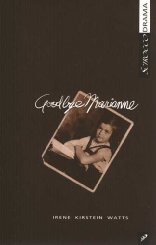
Goodbye Marianne


Goodbye Marianne by Irene Kirstein Watts is considered documentary fiction as it is based on the author's experiences in Germany during the Holocaust combined with experiences of others. Uniquely, this small volume is a play with three to seven actors. Marianne is a young Jewish girl living in Berlin in 1938. She experiences the tightening of laws against Jews. She finds she cannot attend school, cannot sit in the park, and sadly Marianne cannot trust her own emotions. She meets a boy who seems to be her friend until he finds out she is Jewish. She is unhappy to see that he is just like all the rest. In the end, he really is different, but it is not enough. Marianne's mother sends her on one of the first Kindertransportes to Canada. The sadness of this event is all too real for both mother and daughter. Still it saved Marianne's life.

The play is brief at only approximately 30 pages in a small book. I can easily see it being used in middle and high school history classes. The author also provides a well-defined glossary.

TITLE: Goodbye Marianne
AUTHOR: Irene Kirstein Watts
COPYRIGHT: 1995
PAGES: 48
TYPE: Documentary fiction
RECOMMEND: As I mentioned earlier, this could be used as a preformance during a Holocaust unit and open many different discussions.

Friday, May 28, 2010

The Anne Frank Case: Simon Wiesenthal's Search for the Truth

The Anne Frank Case: Simon Wiesenthal's Search for the Truth is primarily the biography of Simon Wiesenthal who lived through the Holocaust years in a number of concentration and death camps and survived to have a tremendous impact on the post-war world. This excellent work provides a complete biography of Wiesenthal while focusing on one of his more noted accomplishments.

In 1958, Wiesenthal was living in Linz, Austria with his wife and recieved a phone call to come to the Landes Theater. Neo-Nazi teenagers were heckling the actors who were performing the stage version of The Diary of Anne Frank. They said the diary was a fake. After doing some investigating on the group of teenagers, Wiesenthal found that most people in his area agreed that the diary was a forgery, being used to extract more money for survivors. Wiesenthal vowed to prove Anne's existence to these young teens by locating the SS officer who arrested Anne and her family.

As Wiesenthal searches for the officer, the author provides the reader with the reason Wiesenthal was willing to spend so much time on this case. A fairly encompassing biography of the man who spent years of his life searching for, and finding, Nazi war criminals is both sad and illuminating. As is often the case, when Wiesenthal found the SS officer Silberbauer, he discovered that the man worked only blocks from his office in Vienna for the Austrian police force. Although Wiesenthal never spoke with any of the teenagers who disrupted the play, he hoped that they all saw the sensational story on the national news and realized that they were wrong. When asked why he continued with his search for war criminals, bringing over 1,100 to justice, Wiesenthal replied,

When we come to the other world and meet the millions of Jews who died in the camps and they ask us, "What have you done?" there will be many answers....But I will say, "I didn't forget you." (p. 34)

The author provides another more indepth biography of Wiesenthal at the end of the book, along with a small glossary and references for factual information contained in the story. These extra sources of information make this book useful for both literature studies and reference information.

I like to look for lesson plans or useful webpages to allow readers to expand their knowledge or the knowledge of children they teach. In many cases, if you go to the publisher's website, you will find an educator's guide of some sort. Here is a great guide put together by Holiday House.

Another source of information on both Wiesenthal and the Holocaust is the Simon Wiesenthal Center. Also visit the museums or resources affiliated with the Center:
TITLE: The Anne Frank Case: Simon Wiesenthal's Search for the Truth
AUTHOR: Susan Goldman Rubin
ILLUSTRATOR: Bill Farnsworth
COPYRIGHT: 2009
PAGES: 32
TYPE: Biography, Holocaust literature
RECOMMEND: I like that this book is based in facts and provides references, which introduces young people to the idea that our factual statements must be grounded in other primary sources. In addition, Wiesenthal is someone who should be recognized for his contributions.

Monday, December 28, 2009

I Never Saw Another Butterfly


I Never Saw Another Butterfly: Children's Drawings and Poems from Terezin Concentration Camp 1942-1944 is a compilation of poems and drawings by children who were imprisoned at the camp during World War II. Originally edited by Hana Volavkov, the second edition was expanded by the United States Holocaust Mermorial Museum. This newer edition also includes a foreword by Chiam Potok and an afterword by Slovak president Vaclav Havel.
According to Volavkov, approximately 15,00 children under the age of fifteen came to Terezin during the war years. Only approximately 100 of these children survived the war. Many of the children who lived in this prison, called a ghetto, spent part of their days creating art and poetry under the teaching of Friedl Dicker-Brandeis. Just like most of her students, Ms. Dicker-Brandeis died at Auschwitz.
The editor has matched the children's drawings with poems and diary entries to provide the reader with a rich experience of the lives of these children. At the end of the book, the biography of each writer or artist is provided. For most of the children, the end came at Auschwitz - leaving only their work behind to tell their stories. Here is the title poem:
The Butterfly
The last, the very last,
So richly, brightly, dazzlingly yellow.
Perhgaps if the sun's tears would sing
against a white stone.
Such, such a yellow
Is carried lightly 'way up high.
It went away I'm sure because it wished to
kiss the world good-bye.
For seven weeks I've lived in here,
Penned up inside this ghetto.
But I have found what I love here.
The dandelions call to me
And the white chestnut branches in the court.
Only I never saw another butterfly.
That butterfly was the last one.
Butterflies don't live in here,
in the ghetto.
4.6.1942 Pavel Friedmann (p. 39)

Here is a link to a lesson plan which can be used with the reading of these poems and provides information for the Houston Holocaust Museum Butterfly Project. It is also possible for students to visit the Terezin Memorial Mueum for a virtual tour.

TITLE: I Never Saw Another Butterfly: Children's Drawings and Poems from Terezin Concentration Camp 1942-1944
AUTHOR: Hana Volavkova, editor
COPYRIGHT: 1993
PAGES: 106
TYPE: non-fiction, Holocaust
RECOMMEND: I think each person can read each poem and get a different picture of the lives of these children and gain a high appreciation for the artist who dedicated herself to children who needed an outlet of expression.

Friday, December 11, 2009

Escaping into the Night


Escaping into the Night by D. Dina Friedman is a fictionalized story of the experiences of some members of the Jewish resistance movement in the area of Belorussia. The author states that she tried to stay true to the actual events that occurred and I believe she did a wonderful job. In fact, I already knew a bit about the Bielski Brothers partisan movement and was surprised at the end to find that this book was fiction - I desperately wanted to know the fate of the characters who became very real to me while reading the book.

Halina Rudowski escapes from a Polish ghetto with her friend Batya and three brothers who are to serve as their protectors as they try to make it safely to the forests and the partisans who are living there. The experiences of these well-detailed characters can be rather brutal at times and may frighten some younger children. In the forest with the partisans, life is not much easier for the young people who live underground and must run from the Nazis more than once. In the end, the Russians do assist the Jews who have survived the forest.

One passage that moved me greatly was the following with one of the older women in the forest encampment speaking to Halina who has lost her father and mother and needs strength to go on:

"We don't talk about the past," Tante Rosa said quietly. "We must live for the present, for each day. At night sometimes, after the girls are asleep I lie awake and think about my husband and the time before the forest. But I can't speak of these things. When I see the sun rise in the morning, I put my hand on the trunk of a tree, and think only about what I have to do to stay alive for one more day." (p. 76)

I think this "not talking" about the past continued for the survivors for many, many years. I personally was priviledged to hear the Holocaust narrative of a sixty-five year old woman who had never shared her story with anyone, even her husband and children. Still, it is only in the sharing that we who were not there can know, can understand, can continue the fight.
On the author's website, you can read the background information that led her to write this book and find links to other information and teaching resources.

TITLE: Escaping into the Night
AUTHOR: D. Dina Friedman
COPYRIGHT: 2006
PAGES: 195
TYPE: fiction, Holocaust
RECOMMEND: I liked this book and think it can be used very nicely with non-fiction accounts of life in the ghettos or partisan camps

Tuesday, October 13, 2009

Children in the Holocaust and World War II


The author who compiled these diaries states that this is the first book of this type from this time period. She introduces the diaries with a rather difficult statement:

Perhaps it is so painful to think about the impact of the war on children - particularly their mass executions - that we have not wanted to read about it, even when that has meant refusing to hear from the children themselves. Maybe it was as much as we could bear to designate Anne Frank the representative child of the Holocaust and to think, then, only of her when we thought about children in World War II. But, in some ways, Anne Frank was not representative of children in the war and the Holocaust. Because she was in hiding, she did not experience life in the streets, the ghettos, the concentration camps, as it was lived by millions of children throughout Europe. (p.xiv)

The diaries, written by children from age 10 to age 18, are arranged chronologically by the age of the child youngest to oldest. The countries represented are Poland, Holland, German, Czechoslovakia, Austria, Lithuania, Russia, Belgium, Englan, Hungary, Israel, and Denmark. The children wrote these diaries from many different locations and situations. Many wrote from the time they moved from their loving homes to a ghetto or a hiding spot. One young boy hid in a cupboard for five year, while another lived and died much like Anne Frank. Many of the children died at the hands of the Nazis in concentration camps, with only these written words somehow surviving to tell their stories. Others survived and published their stories so the world would know.

Selected by the School Library Journal Best Adult Book for Young Adults 1995, this book is a phenomenal resource for those interested in Holocaust history. Because it covers such a wide range of experiences, I think it could be used in middle and high school as a teaching aid with individual children, or small groups, reading the passage and providing their own expression of the child's experience. Some may argue that middle school age children are too young to read these diaries. The author addresses that beautifully:

To turn our eyes away and refuse to see, or to let children see, what prejudice and hatred lead to is truly to warp our collective psyche...The children teach us, by sharing their own direct experience of oppression, that nothing is more valuable than human freedom. This lesson alone is reason enough to rea, and to encourage children to read, these diaries. (p. xx)


TITLE: Children in the Holocaust and World War II: Their Secret Diaries
AUTHOR: Laurel Holliday
COPYRIGHT: 1995
PAGES: 401
TYPE: compilation of Holocaust diaries
RECOMMEND: Excellent book

Thursday, December 18, 2008

Four Perfect Pebbles

Four Perfect Pebbles: A Holocaust Story
Lila Perl and Marion Blumenthal Lazan

This is the story of Marion Blumenthal whose Jewish family fled from Germany during WWII. While waiting for immigration to the United States, the family was held at Westerbork, Auschwitz, sent on the death train, finally rescued, and spent time in a refuge camp. Marion was only 4 when this nightmare began. She hoped that her magical thinking about always finding four perfect pebbles, which represented her family members, would keep them safe. This book is intended for middle school readers and would serve as an excellent Holocaust narrative if students want to read beyond some of the classics.The author maintains her website at Four Perfect Pebbles.


TITLE: Four Perfet Pebbles
AUTHOR: Lila Perl and Marion Blumenthal Lazan
COPYRIGHT: 1996
PAGES: 130
TYPE: non-fiction, autobiographical Holocaust narrative
AWARDS: "Best of the Bunch" Sydney Taylor Award Committee/Association of Jewish Librarians