Showing posts with label Grades 7 - 12. Show all posts

Tuesday, August 10, 2010

Rutka's Notebook: A Voice from the Holocaust


Oh, good Lord. Well, Rutka, you've probably gone completely crazy. You are calling upon God as if He exists. The little faith I used to have has been completely shattered. If God existed, He would have certainly not permitted that human beings be thrown alive into furnaces, and the heads of little toddlers be smashed with butts of guns or be shoved into sacks and gassed to death...It sounds like a fairy tale. Those who haven't seen this would never believe it. But it's not a legend; it's the truth. Or the time when they beat an old man until he became unconscious, becaue he didn't cross the street properly...The end...When will it come?... (pp. 22-24)

These words were written on February 5, 1943 by 14 year old Rutka Laskier who has come to be known as the Polish Anne Frank. During the months when Rutka wrote her diary entries, she lived with her family members in the Bedzin ghetto in south-western Poland, near Krakow.


I learn something new with each book that I read on the Holocaust. I was amazed when I read the diary entry quoted above. This was 1943. Rutka was in a camp in Poland. They KNEW. They knew that humans were being systematically murdered. Rudolf Vrba* and Alfred Wetzler were the first Jewish prisoners to escape from Auschwitz on April 7, 1944. They told officials in the United States, Great Britain, and Rome the truth about the gas chambers and murders. How in the world did Rutka and her group of young people know with such conviction a year earlier? And, of course, the question then becomes - why go to their certain deaths? I know the answer, but it breaks my heart.

According to Rutka's friend, 20 year old Stanislawa Sapinska (in whose house Rutka and her parents lived - the Germans forced the Sapinskas to move out of the ghetto), Rutka was well informed of the course of the war and the status of the military forces, as well of the fate of the deported Jews (p. 2). Stanislawa also indicated that she believed Rutka had contact with the anti-German underground. During her time in the ghetto Rutka told Stanislawa that she felt she would not survive the war and that she would hide her diary under the staircase and hoped that Stanislawa would retrieve it after the war. The ghetto was liquidated in August 1943 (although it is believed that Rutka left in April 1943 and was sent to Auschwitz and murdered shortly thereafter) and Stanislawa kept her word to her friend. She kept the diary hidden for sixty years, taking it out to read on occassion. When she was eighty years old, she decided she should give the diary to the world and presented it to the Yad Vashem Holocaust Museum in Jerusalem. Here is a picture of Rutka's Christian friend on the day she presented the diary to the world:


*(If you would like to read about Vrba and Wetzler's experience, read I Cannot Forgive by Vrba. It is excellent.)

To read the article which went along with the photo, click here. There is also an insightful 2007 interview on NPR. The article includes some excerpts from the diary.

TITLE: Rutka's Notebook: A Voice from the Holocaust
AUTHOR: Rutka Laskier (1929-1943) and Daniella Zaidman-Mauer (editor)
COPYRIGHT: 2008
PAGES: 89
TYPE: Holocaust diary and commentary
RECOMMEND: This book is an excellent resource. In addition to the diary, the reader is provided with considerable discussion on the significance of this young girl's written words. A nice bibliography is also included.

Thursday, July 29, 2010

The Final Journey


The sliding-door of the railway truck closed with a deafening clang. (p. 1)

These are the opening words of The Final Journey by German author Gudrun Pausewang. This is a harrowing fictional account of the journey of a young Jewish girl from innocence to knowledge, from home to Auschwitz, from life to death. Except for brief interludes, the entire novel takes place inside this cattle car on a train bound for Auschwitz. The grim story is told from the perspective of eleven year old Alice who has been sheltered by her grandparents and, in the beginning, really has no understanding of the dire position of the Jews in Europe. On the train with only her grandfather, Alice interacts with all of the different people in the train car who initially only have the Jewish star in common. They come to share hunger, thirst, intimacies, and death. Gradually Alice begins to understand that she has been lied to by her grandparents and lashes out at her grandfather, who dies shortly thereafter. A child is born in the train car, almost certainly to die very soon. Still Alice is hopeful, even as she arrives at the gates of Auschwitz and is led to the "showers".

Alice tipped back her head. Soon, soon, water would pour down over her from the nozze up there. The water of life. It would wash her clean of the dirt and horror of the journey, would make her as clean as she had been before. She raised her arms and opened out her hands. (p. 154)

And the book ends. Was Alice hopeful up to the very end? As she entered the showers, she began her first menses - a sign of life. While Alice did not know the outcome, readers of course know that for millions of Jews, this shower was the absolute final journey. Did the author stop at this point to allow the reader to contemplate hope vs. acceptance, knowledge vs. denial? In any case, the ending broke my heart all over again.

Another interesting tidbit (from a novel full of instances which could serve as discussion points) is the following passage:

The train was still standing in the afternoon sun. "This is murder!" shouted a man's voice from the neighbourhing truck. Alice's eyes opened with shock. "And God lets it happen!" screamed a woman. "What have we done? Just lived our lives like everyone else!" "Those people outside see the trains passing and no one does anything about it," moaned the woman. "Saw nothing, heard nothing." (p. 48)

I have wondered about just this scenario over my years of reading Holocaust materials. How many people saw the events taking place, but for whatever reason felt incapable of action? I know there were many who agreed with Hitler's assessment of the Jews, but there were also people who opposed the treatment of fellow human beings. There are records showing that at times people would throw bread to the people in the cattle cars. But, sadly, there are also reports of people jeering at the Jews.

Gudrun Pausewang was born in 1928 in a village in what is now the Czech Republic. Her father was a diplomat and was killed on the Russian front in 1943. In 1948, Gudrun and her family fled from communism to West Germany where she trained as a teacher. She has written a number of other books, mostly dealing with social issues, with only a few translated to English. Fall Out (about a nuclear accident) and Traitor (Holocaust related) are two that have been well-reviewed.

TITLE: The Final Journey
AUTHOR: Gudrun Pausewang
TRANSLATOR: Patricia Crampton
COPYRIGHT: 1996, original in German 1992
PAGES: 154
TYPE: Holocaust fiction
RECOMMEND: I found this to be one of the most difficult books I have ever read - only because I knew that the end would not be good. I am not sure I had ever really considered how difficult the journey.

Sunday, July 11, 2010

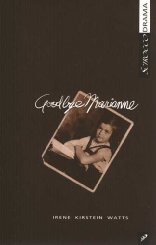
Goodbye Marianne


Goodbye Marianne by Irene Kirstein Watts is considered documentary fiction as it is based on the author's experiences in Germany during the Holocaust combined with experiences of others. Uniquely, this small volume is a play with three to seven actors. Marianne is a young Jewish girl living in Berlin in 1938. She experiences the tightening of laws against Jews. She finds she cannot attend school, cannot sit in the park, and sadly Marianne cannot trust her own emotions. She meets a boy who seems to be her friend until he finds out she is Jewish. She is unhappy to see that he is just like all the rest. In the end, he really is different, but it is not enough. Marianne's mother sends her on one of the first Kindertransportes to Canada. The sadness of this event is all too real for both mother and daughter. Still it saved Marianne's life.

The play is brief at only approximately 30 pages in a small book. I can easily see it being used in middle and high school history classes. The author also provides a well-defined glossary.

TITLE: Goodbye Marianne
AUTHOR: Irene Kirstein Watts
COPYRIGHT: 1995
PAGES: 48
TYPE: Documentary fiction
RECOMMEND: As I mentioned earlier, this could be used as a preformance during a Holocaust unit and open many different discussions.

Sunday, May 30, 2010

Tell No One Who You Are: The hidden childhood of Regine Miller

Tell No One Who You Are: The hidden childhood of Regine Miller is the story of a young Jewish girl from Belgium who survived the Holocaust pretending to be someone she was not, or more importantly pretending not to be what she was. As a very young girl, Regine went with her father to political meetings in Brussels called Solidarite. When Jews in Belgium were required to wear the yellow star, Regine's father sewed a red star to the back of her star and believed that when the war was over, they would freely show their resistance to hate by wearing the red star. The hope that she and her father would be reunited to wear these red stars kept Regine going.

At the age of 10, Regine's father was arrested, her brother was called up, her mother was dying from cancer. She went to live with her grandmother, who finally sent her away alone, to hide as an Aryan child. A friend of her father's, Fela, helped make the arrangements. Regine lived with four different families - none of whom realized she was Jewish. Three of the four families pocketed the money, or coupons, they received for her care and provided only the very basic shelter and food. The last family lived on a farm and considered young Regine the daughter they never had.
As the war ended, Regine left the last family to try to find her father and to discover what really happened to her mother and brother. As she met other survivors, Regine did not tell her fantastic journey through the Holocaust. The author suggests a reason for her silence:

Regine did not realize that she was behaving like most of the Jews in Europe who had survived the war. They did not talk about their experiences and they did not ask questions. Whether they had passed through the horror of the death camps or the terror of being caught while hiding, to talk about it was to relive it or cause others to relive it, and release emotions too intense to be dealt with. (p. 161)

In a number of memoirs which I have read, this silence is mentioned as a means of self-protection. I spoke personally with one elderly survivor who had never told her own story, not even to her husband and family. Deep memories which when shared will hopefully remind us of our own duty to remember.

Although it seems that there has not been a Hidden Children Gathering since 2003, the web page Hidden Child Foundation/Anti-Defamation League provides some interesting links and information. Included are three short but compelling accounts of other children who were hidden during the Holocaust:

There is also a teachers guide to be used with these stories and others which might be included.

TITLE: Tell No One Who You Are: The hidden childhood of Regine Miller
AUTHOR: Walter Buchignani
COPYRIGHT: 1994
PAGES: 185
TYPE: Biography, Holocaust literature
RECOMMEND: This book is fascinating as it shows the good and the bad in people who had a choice to help children. While many people did assist Jewish children, many took money to help children and withheld food and necessities. The book also contains a small glossary and some factual information on the hiding of children during the Holocaust.

Thursday, May 13, 2010

Tropical Secrets: Holocaust Refugees in Cuba

Tropical Secrets: Holocaust Refugees in Cuba by Margarita Engle was the 2010 recipient of the Sydney Taylor Book Award for Teen Readers. After reading the book, written in free verse, I can understand why the book was selected. Especially when you combine the format with the little known history of Jewish refugees in Cuba.

The colorful and exotic cover art invites the reader to join Daniel, David, Paloma, and Paloma's father in 1940 Cuba. Daniel is a young Jewish refuge from Germany who is among the people allowed to disembark from the large ship in Cuba. The ship was turned away in Canada and the United States. David is an older Jewish man who fled Russia many years before World War II. Paloma is the daughter of a wealthy Cuban who is stuffing his own pockets at the expense of the refugees who have to pay him to come off the ship. The story of these four people is told in alternating poetic verses. David tries to give Daniel advice about living in a new country while Paloma befriends Daniel against her father's wishes. The two young people share sad secrets as they try to reach for their dreams.

Joy and truth both have a way
of peeking through any dark curtain.
(p. 73)

One of the more interesting points made in the book is that many non-Jewish Germans were arrested in Cuba as spies. In many cases, having the J for Jew stamped on the passport saved a person from being arrested. How different from Europe where the J was enough to be killed. The young people hide a husband and wife who would have been arrested. Compassion and understanding are strong components of this book.

TITLE: Tropical Secrets: Holocaust Refugees in Cuba
AUTHOR: Margarita Engle
COPYRIGHT: 2009
PAGES: 198
TYPE: Holocaust fiction
AWARD: 2010 Sydney Taylor Book Award for Teen Readers
RECOMMEND: I enjoyed the format of the book and am grateful to the author for providing us with knowledge of a little known group of Jewish survivors of the Holocaust.

Sunday, March 7, 2010

Thanks to My Mother


Thanks to My Mother by Schoschana Rabinovici (translated from the German by James Skofield) is startling in its brutality. The book is narrated by a young Jewish girl, Susie Weksler. Susie was only eight years old when the Nazis came to her city of Vilnius, Lithuania. It is interesting that the perspective provided is from Susie's young eyes. The fact that we have a very young narrator (who wrote the book after the fact) makes the narrative even more compelling - I wondered throughout how such a young girl could have coped with the events she describes in great detail. I know that having her mother with her, to protect her and encourage her were key. The two were first moved into a ghetto, then to labor camps. Raja, Susie's mother, who had disguised Susie to look much older, worked hard to ensure that Susie had extra food and clothing. In the midst of cruelty and murder, Raja also found ways to help the other women in the camps. At the end, only Raja, Susie, and one other family member survived the Holocaust.
I was unable to locate any specific lesson plans for this title. I suspect the detailed horrors will be difficult for some children, so it might be best for it to be an individual read. If you locate any teaching materials to go with this work, please include a link in your comments.
TITLE: Thanks to My Mother
AUTHOR: Schoschana Rabinovici (translated from the German by James Skofield)
COPYRIGHT: 1998
PAGES: 246
TYPE: non-fiction, Holocaust narrative
RECOMMEND: A very brutal account of one Jewish family and their experiences during the Holocaust. This book covers the horrors of the ghettos, camps, and marches.
AWARDS: 1999 Batchelder Award winner

Friday, December 11, 2009

I Have Lived A Thousand Years: Growing Up In The Holocaust

I Have Lived a Thousand Years: Growing up in the Holocaust by Livia Bitton-Jackson is her personal narrative of her life during the Holocaust. In the summer of 1943, Elli was thirteen years old and lived with her family in a small farming town near Budapest. The Jewish population was ordered to stop attending school or going about their daily business - they were to wear the yellow star. Finally in April 1944, Elli and her family were sent first to a ghetto and then to Auschwitz. After an awful time in the death camp, Elli and her mother were sent to Augsburg as part of a work force. Although the experience in Augsburg was better than the death camp, it was short and Elli and her mother were transported to Dachau where they were reunited with Elli's brother Bubi. Finally the family was liberated from cattle cars by the Americans on April 30, 1945. The soldier who spoke with Elli thought she was sixty-two years old when she was only fourteen. Elli writes, I am fourteen years old, and I have lived a thousand years. (p. 205) In 1951, the family immigrated to America.

Each Holocaust narrative has something special to give to the reader. In this case, I believe that Ms. Bitton-Jackson has answered a question I frequently hear - People ask why I am drawn so strongly to the Jewish experience during the Holocaust. In the foreward to her book, the author writes:

My hope is that learning about past evils will help us to avoid them in the future. My hope is that learning what horrors can result from prejudice and intolerance, we can cultivate a commitment to fight prejudice and intolerance. It is for this reason that I wrote my recollections of the horror. Only one who was there can truly tell the tale. And I was there. My stories are of gas chambers, shootings, electrified fences, torture, scorching sun, mental abuse, and constant threat of death. But they are also stories of faith, hope, triumph, and love. They are stories of perseverance, loyalty, courage in the face of overwhelming odds, and of never giving up. My story is my message: Never give up. (p. 11)

I think this is why I am drawn to the Holocaust narratives - the universal ideas of hope and survival, the intimate relationships that sustained people through horrible times.

TITLE: I Have Lived a Thousand Years: Growing up in the Holocaust
AUTHOR: Livia Bitton-Jackson
COPYRIGHT: 1997
PAGES: 234
TYPE: non-fiction, Holocaust narrative
RECOMMEND: I think the author has shown a wide range of experiences during the later years of the war, from the ghetto to the transfer from camp to camp as the Allied forces came closer. Excellent book.